
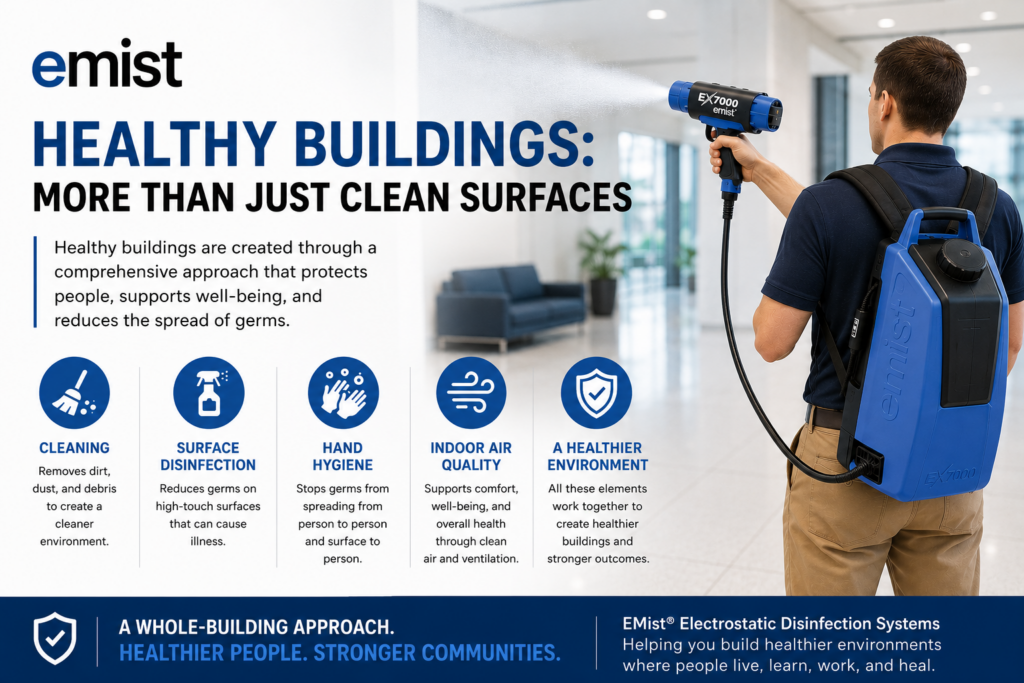
When people think about healthy buildings, they often focus on how clean a facility looks. While appearance is important, truly healthy buildings require much more than spotless floors and shiny countertops. Creating healthier indoor environments involves a comprehensive approach that includes cleaning, surface disinfection, hand hygiene, indoor air quality, and occupant behavior.
As organizations continue to prioritize the health and well-being of employees, students, patients, and visitors, the concept of healthy buildings has become increasingly important. Facilities that invest in a well-rounded infection prevention strategy are better positioned to support occupant wellness, reduce the spread of germs, and promote confidence in shared spaces.
What Makes a Building Healthy?
Healthy buildings are designed and maintained to support the physical well-being of the people who use them. This extends beyond aesthetics and includes factors that influence comfort, safety, and overall health.
Some of the key components of healthy buildings include:
- Effective cleaning practices
- Consistent surface disinfection
- Proper hand hygiene
- Good indoor air quality
- Routine facility maintenance
- Occupant education and awareness
Each of these elements plays a role in creating healthier environments and reducing the risk of illness transmission.
Why Cleaning Alone Isn’t Enough
Cleaning is an essential first step in maintaining healthy buildings. By removing dirt, dust, and debris, cleaning helps create a more sanitary environment and prepares surfaces for disinfection.
However, cleaning alone does not necessarily eliminate harmful microorganisms. Surfaces that appear clean may still harbor bacteria and viruses capable of spreading illness. That’s why healthy buildings require a combination of cleaning and disinfection to support a comprehensive infection prevention strategy.
When facilities rely solely on cleaning, they may miss opportunities to address germs that can remain on frequently touched surfaces throughout the day.
The Role of Surface Disinfection in Healthy Buildings
Surface disinfection is a critical component of healthy buildings because it helps reduce microorganisms on high-touch surfaces such as door handles, desks, countertops, railings, and shared equipment.
Consistent surface disinfection can help support healthier indoor environments by targeting areas where germs are most likely to spread. In many facilities, electrostatic disinfection technology can improve efficiency by helping disinfectants reach difficult-to-clean surfaces more effectively.
While surface disinfection is important, it should be viewed as one piece of a larger healthy buildings strategy rather than a standalone solution.
Hand Hygiene Remains One of the Most Effective Defenses
Even in healthy buildings with robust cleaning and disinfection programs, people can still transfer germs from surface to surface through everyday contact.
Proper hand hygiene remains one of the simplest and most effective ways to reduce the spread of illness. Encouraging regular handwashing and providing convenient access to hand sanitizing stations can significantly strengthen a facility’s infection prevention efforts.
Healthy buildings support good hand hygiene by making it easy for occupants to clean their hands throughout the day.
Indoor Air Quality Matters
Another important factor in healthy buildings is indoor air quality. Ventilation, filtration, and airflow all contribute to the quality of the indoor environment.
Poor indoor air quality can impact comfort, productivity, and overall well-being. Maintaining HVAC systems, replacing filters regularly, and ensuring adequate ventilation can help support healthier indoor environments.
When combined with cleaning, surface disinfection, and hand hygiene, good indoor air quality becomes an important part of a complete healthy buildings strategy.
Creating a Comprehensive Healthy Buildings Program
The most successful healthy buildings programs recognize that no single practice can address every risk. Instead, facility managers should focus on creating layered approaches that combine multiple preventive measures.
A comprehensive healthy buildings program should include:
- Routine cleaning schedules
- Consistent surface disinfection protocols
- Hand hygiene education and accessibility
- Indoor air quality monitoring
- Staff training and compliance measures
- Regular evaluation and improvement of procedures
Together, these efforts help create environments that support occupant health and build confidence among those who use the facility.
Looking Beyond Clean Surfaces
Healthy buildings are about more than appearances. While clean surfaces are important, they represent only one aspect of a larger strategy focused on occupant wellness and infection prevention.
By combining cleaning, surface disinfection, hand hygiene, and indoor air quality initiatives, organizations can create healthier environments that better support employees, students, patients, and visitors.
As the expectations for healthier indoor spaces continue to grow, investing in healthy buildings is no longer just a facility management goal; it’s an essential part of creating spaces where people can thrive.